We had been cherishing this idea for a long time; its realization is now in the present tense, and we will definitely count on it in the future. We gathered “just” to talk about things, a part of which is private and another part of which is a public matter.
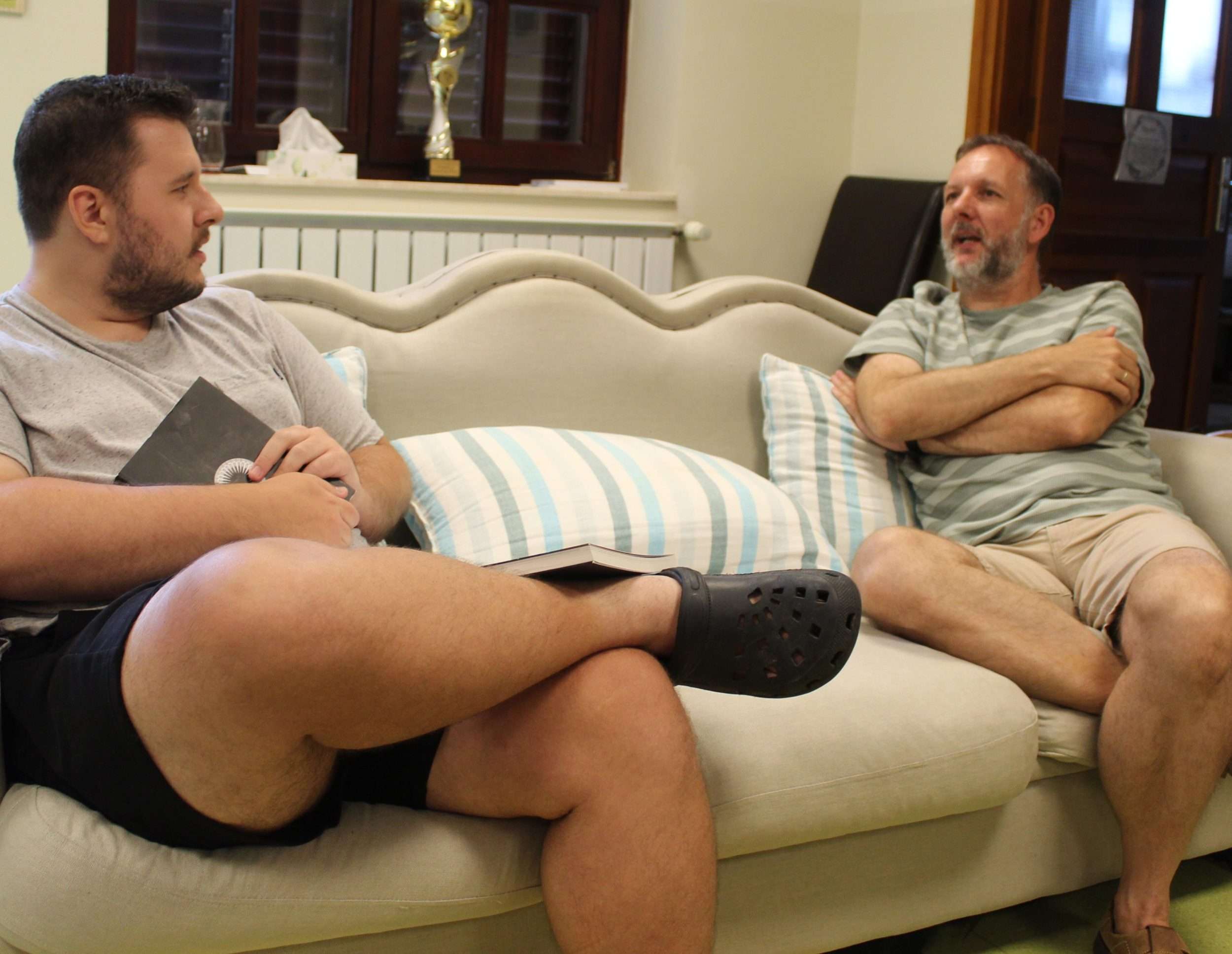
It was almost a year ago when the idea of a debate evening about religion first occurred to me, and although circumstances and a lack of time often did not allow it, now we finally managed to realize it. My debating partner was Gombos Peti, one of the (reading comprehension) developers of the Kaposvár Community House, who himself is a member of the Catholic church community. We had not yet known him in this capacity, so it seemed ideal to talk with him about the more important questions. We spoke about Christianity, the 2000-year history of it and its church, the black spots in its history, secularization, and then about atheism, its most important sins, and finally, sailing onto the broader waters of world religions, we also talked about Judaism, Islam, and Eastern beliefs. My goal throughout was, on one hand, to step out of the false dilemma of science vs. religion, since this is actually a red herring; science and religion seek to describe different spheres of existence. On the other hand, it was also important to dissolve, explain, and move beyond basic stereotypes, and to look a little behind religions to see what we find there. We disagreed on many things, which I consider particularly good, because if I had to highlight one thing as the most important civic duty, it would be discourse itself—and not only with those with whom we have the smallest or even the most severe disagreements, but indeed, one must sit down with everyone to talk about our common affairs. If we cannot do this, they will never become adults in a social sense, and we will not reach a consensus on the issues affecting us all either. I hope the debate proved interesting and even more thought-provoking for my groupmates as well, and I also hope that we will manage to arrange a continuation and address other difficult topics in the future. Thank you to Sasa for the opportunity and help, and to Gombos Peti for participating!
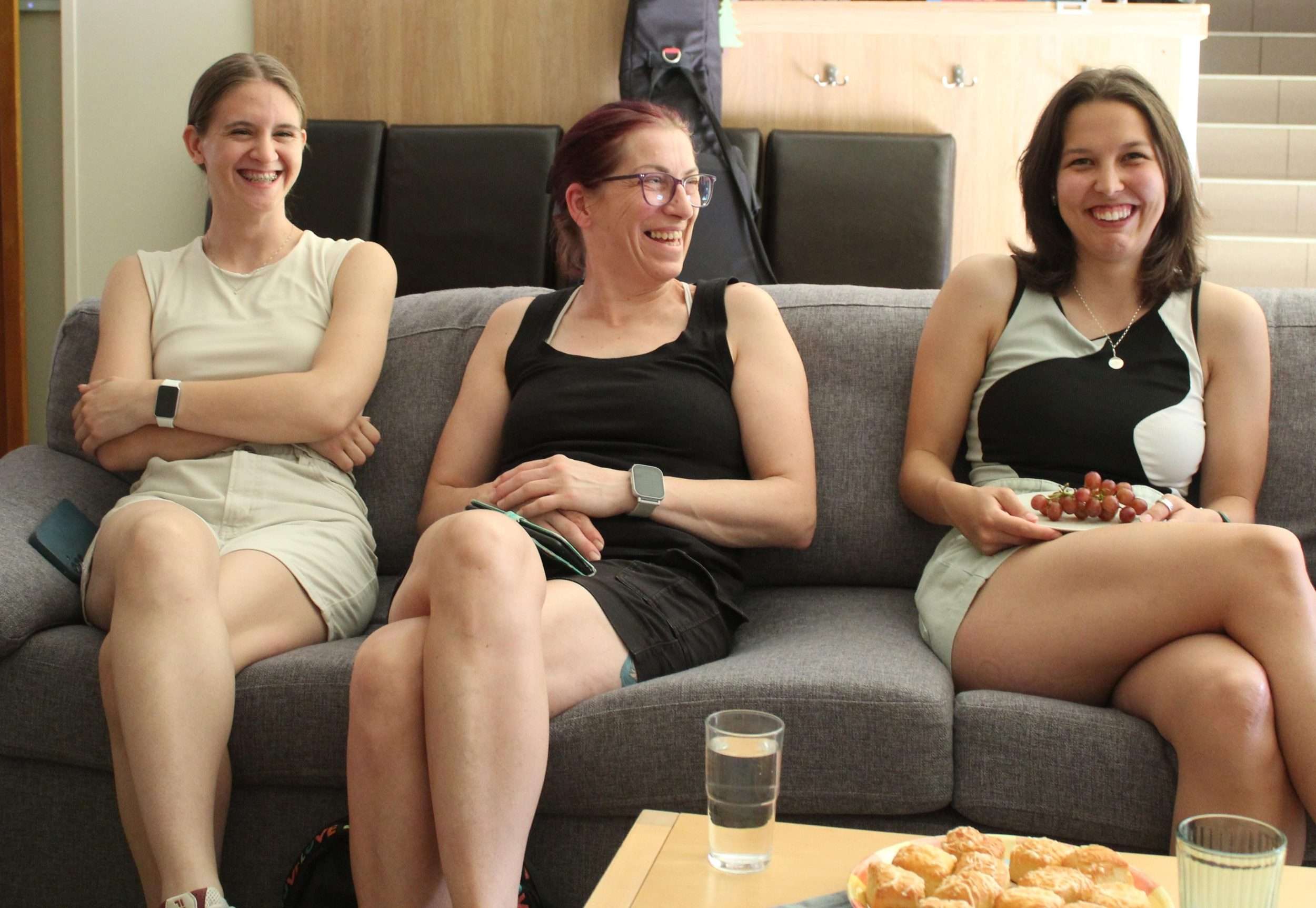
Our generation is the least talkative, while we share the most information about ourselves: where we are, what we ate, what our outfit is like, who our friends are. But never about what we think regarding the integral parts of our everyday lives; we do not search in the deeper layers, we only discuss the surface. On the Friday evening of June 19, we immersed ourselves in a topic that is perfect as the basis for a discourse, since every single person experiences it differently: religion and faith. We talk a lot and we know how to. We know each other, almost all of our quirks, and many of our innermost secrets too. Yet, how much novelty this Friday evening conversation about faith and religion brought. Not only knowledge (thanks for that to the prepared moderator and to our polymath Teacher Gombos), but we also received quite a bundle worthy of further thought about free will, commitment, engagement, understanding, and the necessity of openness and acceptance—which also emerged from the discourse in the context of “faith” and “religion.” It was not a taboo to cast our votes beside atheism, but perhaps what I felt was the most beautiful was that after the hour-and-a-half-long guided conversation, we continued more informally and honestly right where it left off: we told each other who is afraid or precisely not afraid of death, and about life after death. And although we disagreed on many things, I think the resulting exchanges of opinions are important if only because I thought I knew everyone, and yet how much novelty such a discourse, another conversation, could give us and show about one another. Then the evening continued and concluded with a board game party lasting until dawn, and with the promise to each other: to be continued.
Dominik Antal and Jázmin Pretz