On October 10, 2026, we held our first project session of the year at the Community House. Following our arrival and shared breakfast, the first theoretical lesson of the Maker’s Red Box – Global Warning – Climate Expedition Around the Earth project began, in which we studied the climate changes of geological eras and their underlying causes. The theoretical curriculum was made more diverse and experiential through a Kahoot knowledge-assessment quiz and interactive games put together by the junior mentors from Szeged.
During the session, we reviewed how the Earth’s climate has never been constant: its development is shaped by the interconnected processes of solar radiation, the atmosphere, oceans, ice and snow cover, landmasses, and living organisms. We learned about the formation of the young Earth’s atmosphere, the role of photosynthetic microorganisms in the appearance of oxygen, as well as how the ratio of carbon dioxide and oxygen changed throughout geological history. Through the carbon cycle and the example of ancient swamp forests from the Carboniferous period, we also examined how coal was formed. Following this, we compared the factors inducing natural climate changes in the past—such as solar activity, volcanism, continental drift, and ocean currents—with the human impacts that have been intensifying since the Industrial Revolution. Special attention was paid to the mechanism of the greenhouse effect and the roles of carbon dioxide, nitrous oxide, fluorinated gases, water vapor, and surface-level ozone. We also explored how energy production, transportation, industry, agriculture, land use, and waste management contribute to greenhouse gas emissions. The key message of the lesson was that while the natural greenhouse effect is essential for life, the rapid warming of our era is amplified by the excess of these gases resulting from human activity.
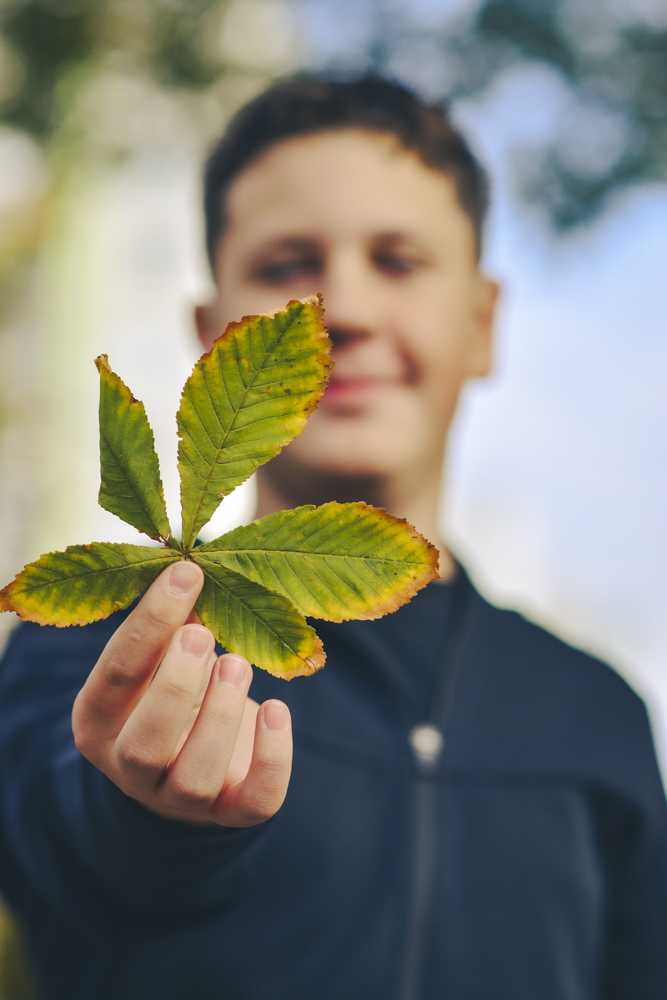
In the second part of the afternoon program, we focused on the biological background behind the yellowing and browning of autumn leaves. We examined how shortened daylight hours and decreasing temperatures cause the supply of chlorophyll to diminish and eventually cease. As the green pigment breaks down, the yellow and orange carotenoids already present in the leaves become visible, while reddish anthocyanins form in certain plants. We also sought answers to why leaves of different tree species do not discolor in the same way, and how browning is linked to the further decomposition of plant pigments.
We connected the theoretical knowledge with demonstrations of chromatographic methods. We learned how chromatography separates the components of mixtures based on their differing affinities to the stationary phase and varying solubilities in the mobile phase. Under school conditions, we performed a paper chromatography experiment: we prepared pigment extract from leaf samples, applied it to filter paper, and used a solvent to attempt to separate chlorophylls and carotenoids. During the investigation, we also experienced that an important part of scientific work is the continuous verification and refining of methods. Based on the initial results, the selection of appropriate paper and solvent, as well as the size of the pigment spot and the experimental setup, still require further fine-tuning. In the upcoming sessions in October, we will further develop the method, repeat the tests, and carry out the recording, measurement, and evaluation of the results.
Péter Mikics, mentor