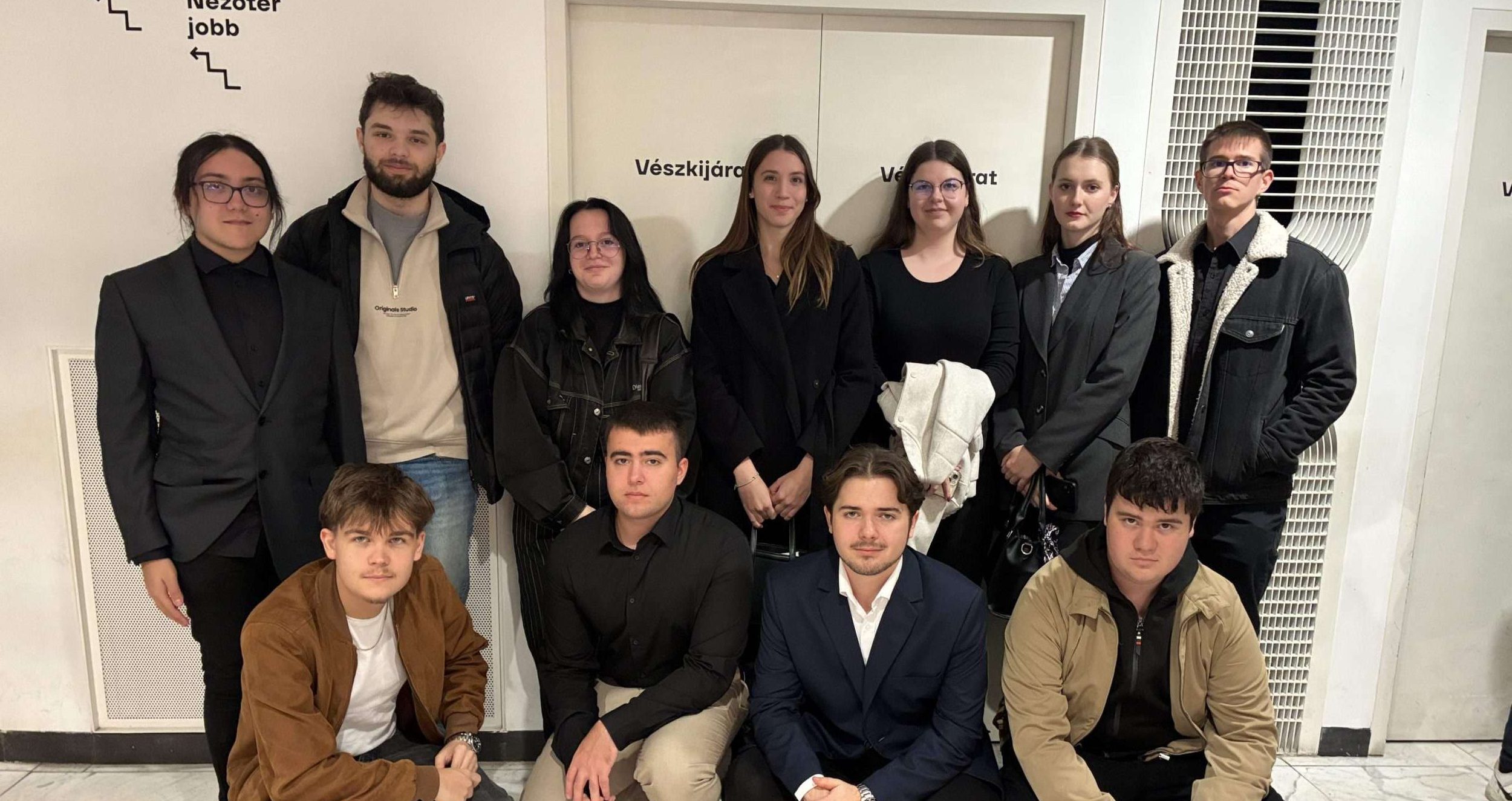
“A woman was believed missing on a tour in Iceland. Her companions began searching for her, but the targeted person also joined the search operation. (…) Around fifty people combed through the area, and they even planned to deploy a helicopter. The operation was only called off on Sunday morning after the person involved solved the mystery with great difficulty and reported to the police.” Index, 30.08.2012. This peculiar event forms the basis of Eszter Anna Szilágyi’s word opera, directed by Csaba Polgár at the Örkény István Theatre. Together with Jászság Group 3, we watched a performance from the new season, the play titled The Woman Who Searched for Herself. The plot is simple: a passenger goes missing during a tour, and the others begin searching for her. In the diverse environment of the bus, everyone has a partner except for the lonely woman sitting in the back row—this loneliness and invisibility almost foreshadows her fate: it is no coincidence that she becomes the missing person. The play expresses sharp social criticism regarding the superficiality of tourism and social blindness: the passengers cannot even give a consistent physical description of their companion; instead of lived experiences, only photos and piles of trash remain behind them, while they insensitively trample over the lives of the locals. The absurdity of the situation culminates when the “missing” woman herself joins the search. She is the first to realize the mistake, yet she remains invisible to the others: a change of coat and tied-up hair are enough for no one to recognize her until she puts back on her original clothes. Due to the bustle of the stage and parallel scenes, the viewer almost becomes a passenger themselves; we have to decide what to focus on at any given moment. This multifacetedness sparked a lively debate among us after the performance. Almost our entire group was visiting the Örkény for the first time, so the unusual visual language and style left a deep, unique impression on everyone. Reconnecting was a special joy, as university and distance make such occasions rare during the academic year: thus, beyond the reunion, this evening also provided a great opportunity to discuss everyone’s most defining theater experience.
Tilda Tamasi, Jászság Group 3